LhARA Recognizes World Cancer Day; Highlights from the collaboration
The LhARA team recognises World Cancer Day. We are also grateful to our many supporters who, in 2025, have helped advance the work of the LhARA collaboration, and we are pleased to share recent updates, upcoming opportunities, and highlights from across the collaboration.
In This Issue
Message from the LhARA Team
Highlights from Recent Activities
Upcoming Events
Collaborator Spotlight
Stay Connected
Message from the LhARA Team
From its inception, LhARA has been a strong partnership between national and international collaborators and industrial partners: the partnership approach reflecting our shared commitment to co-creation and delivery; the work that has culminated in the completion of the ITRF/LhARA Conceptual Design Report (CDR), linked below. Its completion has sharpened our collective understanding of both the ambition and the scope of the initiative.
Through this process, we have established that the LhARA initiative is intended to:
Deliver a systematic and definitive radiation biology programme;
Prove the feasibility of laser-hybrid acceleration of proton and ion beams; and
Lay the foundations for the transformation of clinical practice of ion beam therapy.
As we start 2026, it is appropriate to recognise the significant progress that has been made across the collaboration. We enter the new year with a clear sense of purpose and a shared determination to build on this momentum in the year ahead.
On World Cancer Day, the LhARA collaboration reflects on the critical role of modern radiotherapy in curing cancer and improving patients’ quality of life. Recognising that cancer is a deeply personal disease requiring tailored treatment, the collaboration is focused on pioneering new laser-driven techniques to make proton and ion beam therapies more accessible, increase efficacy, and reduce side effects.
– Professor Kenneth Long
Recent Highlights
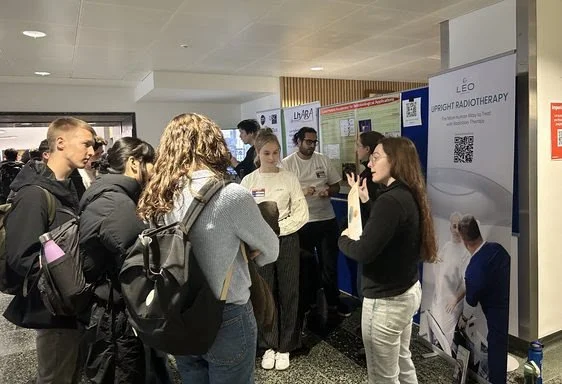
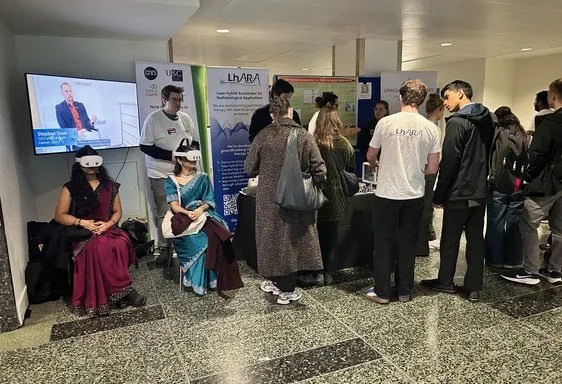
Imperial Lates Exhibition
Date: 23 October 2025
Location: Imperial College London
LhARA was a featured exhibitor as the Imperial College introduced the public to the fascinating ways light helps people understand the world, from sunlight's effects on skin to the vast reaches of space.
SCAPA Beamline Progress
Date: 19-20 November 2025
Location: University of Strathclyde (SCAPA)
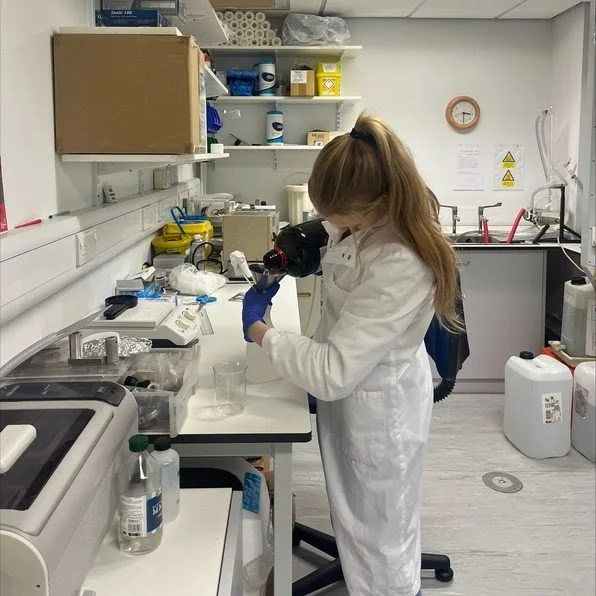
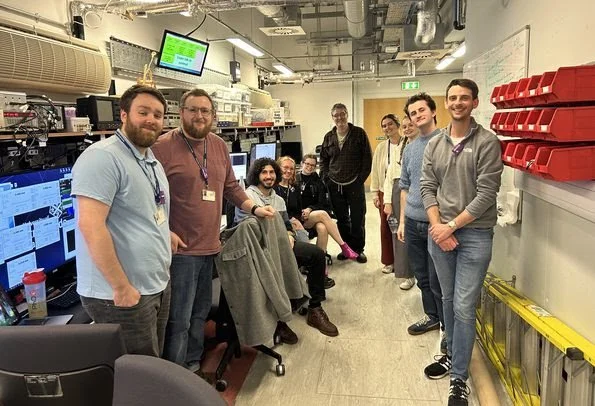
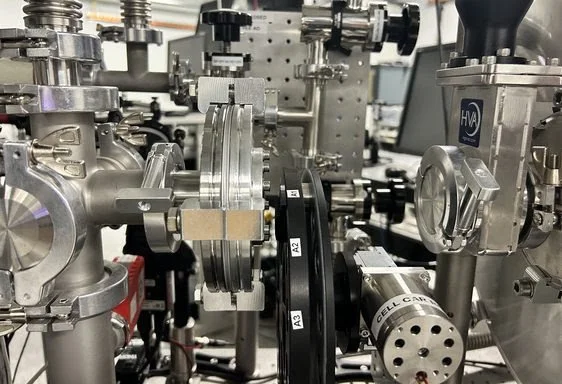
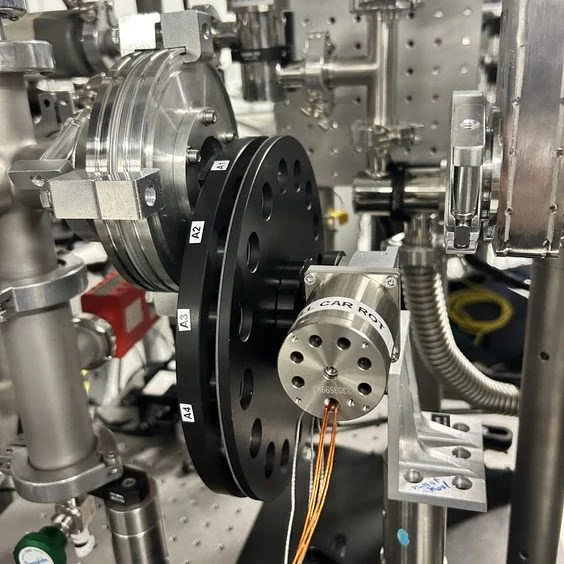
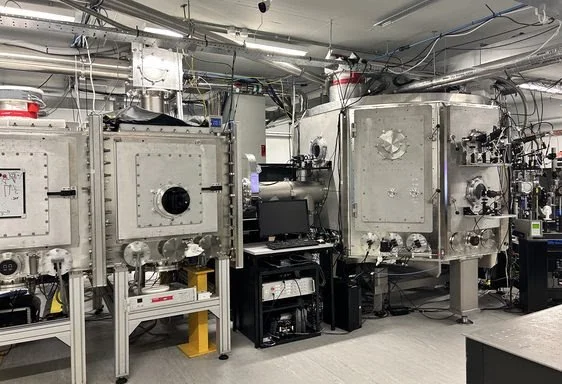
The LhARA team achieved a significant milestone with the irradiation of two cell lines using laser-driven proton beams with energies centred on 8–10 MeV and a dose per shot of ~0.5 Gy. A range of total doses was delivered. The effort produced a library of RCF and lanex dose measurements that can be used to study uniformity, stability, etc. The PoPLaR team drew on the support of the wider LhARA collaboration to deliver the radiobiology programme defined and led by Jason Parsons and Emma Melia; the local SCAPA team, led by Robbie Wilson, was highly professional, focused on delivering quality at all times. And, a special “shout out” to Diaza, who crossed half the world, travelling from Indonesia to Glasgow, to take part.
Two Successful PhD Defenses
Date: November 2025
Location: Imperial College London
Josie McGarrigle
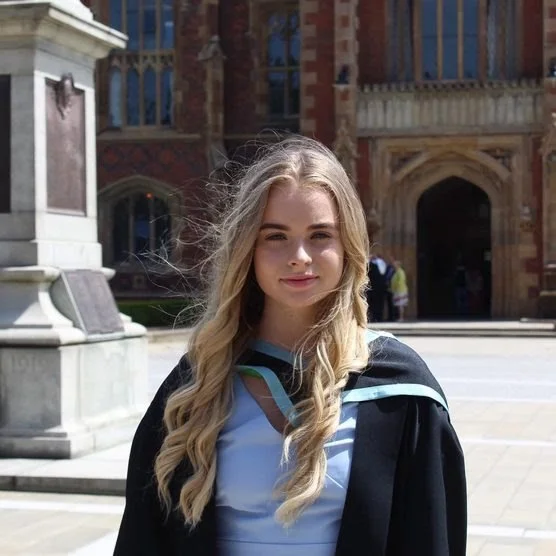
My PhD thesis explored new approaches to radiotherapy delivery, focusing on advanced beam modulation techniques like FLASH and SFRT. I investigated how we might integrate these methods into the design of LhARA and developed a machine learning–based tool to optimise laser-driven beams. This was adapted for use in initial radiobiological studies at the laser-driven source at SCAPA.
Maria Maxouti

My PhD focused on using acoustic waves generated by short pulses of proton and ion beams to measure how radiation dose is delivered inside tissue-like materials. This work contributes to LhARA by helping develop new diagnostic tools to monitor and verify advanced ion beams in real time for future radiobiology and medical research. Completing my PhD has been both challenging and rewarding, and I'm proud I have contributed to such an exciting and forward-looking project.
Interim CDR
Published: 28 November 2025
Through joint efforts of staff at the STFC national laboratories and the collaborating institutes, the interim CDR has been completed. The collaboration will shift focus to the creation of a self-sustaining, multidisciplinary R&D program alongside a science-delivery and impact-generation program that maximizes the benefits of the LhARA initiative, with the ultimate goal of building LhARA, an international research facility, and developing a clinical machine with industry.
Upcoming Events
Charged Particles for Cancer Therapy Workshop
Date: 27 February 2026, 10:00 GMT
Location: Room 121, Sir Alexander Fleming Building, Imperial, South Kensington Campus
The first workshop of the series will:
Review the state of the art in particle beam therapy together with the most advanced technological developments in the field.
Discuss the unique flexibility in the time and spatial properties provided by laser-driven beams, which, when combined with advanced diagnostics and automation, can revolutionise particle therapy; and
Identify the key biological and clinical sciences that must be addressed to develop a new personalized cancer therapy with laser-driven ions.
The discussion at the workshop and the conclusions drawn will be documented in a 'White Paper' that will be published to provide the basis and underlying strategy for the future development of laser-driven charged particle beams for cancer therapy. This workshop will call on scientific, clinical, and industry leaders in the field.
LhARA Collaboration Meeting
Date: 29-30 April
Location: Rutherford Appleton Laboratory, Harwell Science and Innovation Campus, Oxfordshire
One of LhARA's major biannual collaboration meetings, where attendees present their recent work and share their results. Those attending will hear updates from all disciplines across LhARA, in particular on R&D for the LhARA accelerator; results from the plasma lens capture experiments and simulations; and the latest multidisciplinary results from the radiobiology experiments conducted at SCAPA, including both the physics of the laser-accelerated beams and the radiobiology of the irradiated cells.
Royal Society Summer Science Exhibition 2026
Date: 30 June - 5 July 2026
Location: The Royal Society, London
Save the date to join LhARA at the Royal Society Summer Science Exhibition, taking place from 30 June to 5 July 2026 in London. This public engagement event welcomes around 10,000 visitors, including members of the public, school groups, policymakers, and media, offering a unique opportunity to showcase cutting-edge science to non-specialist audiences.
Through an interactive exhibit, the LhARA team will highlight how advanced accelerator technologies can transform future research and healthcare, inspiring curiosity and conversation across generations. We look forward to welcoming visitors to explore, ask questions, and discover how LhARA is shaping the future of particle acceleration.
Collaborator Spotlight
CP4CT
Charged Particles 4 Cancer Therapy
We are pleased to introduce CP4CT, a charity driven by a conviction that pioneering cancer research that integrates physics, engineering, and medical expertise will drive meaningful breakthroughs in treatment. This registered charity was set up to support the LhARA initiative. You can learn more about the charity, as well as donate to support the LhARA initiative through CP4CT.
Thank you
Thank you for your continued interest and support in LhARA. We are very excited about 2026 and look forward to sharing more about this important collaboration in the new year.