
Come and meet LhARA! Join us at the Royal Society Summer Science Exhibition
Welcome to the Spring 2026 LhARA newsletter. We are pleased to share recent updates, upcoming opportunities, and highlights from across the collaboration
In This Issue
Message from the LhARA Team
Highlights from Recent Activities
Upcoming Events
Collaborator Spotlight
Stay Connected
Message from the LhARA Team
We began this year with a renewed sense of purpose and a shared determination to continue our collective drive to develop the techniques required to transform cancer care. Having published the Conceptual Design Report, our focus turns to making the case for the LhARA initiative and for a dedicated facility to study the biological effects of proton and ion beams in ways not currently possible.
Today, radiotherapy is used in 50% of cases and is instrumental in 40% of cures. Executing the LhARA initiative and building the LhARA facility would lead to improved treatment and patient outcomes and could also open a path to more compact and affordable particle therapy systems, with potential implications for how widely such treatments could be made available for future patients.
Despite the potential of proton- and ion-beam therapy, we still have much to learn about how different ions, dose rates, and delivery patterns affect biological responses. With cancer being the UK's most common cause of death and its incidence increasing, advancements in our research could not come at a more critical time. I continue to be convinced that LhARA’s multinational, multidisciplinary collaboration is key to delivering the breakthroughs patients need.
– Professor Kenneth Long
Featured Event
Royal Society Summer Science Exhibition 2026
Date: 30 June - 5 July 2026
Location: Royal Society, 6-9 Carlton House Terrace, London SWIY 5AG
Join LhARA at the Royal Society Summer Science Exhibition to discover the latest cutting-edge research and innovation from across the UK. Step into the future of cancer treatment with a virtual reality tour of the LhARA facility:
Pop balloons with real laser beams
Watch pollen float in mid-air using the same physics that guides particle beams
Sit in the actual chair designed for patient treatment
Try your hand at treatment planning with real medical physicists
Discover how light itself could open new doors in cancer care
RSSSE Panel Discussion
Date: 1st July 2026
Location: Royal Society, Carlton House Terrace, London
Can emerging science beat cancer? This event is part of the Royal Society's Summer Science Exhibition 2026. In the past 50 years, deaths from cancer have fallen by more than a fifth, thanks to progress made in prevention, detection and treatment. But can further advances in medical science reduce this number even further?
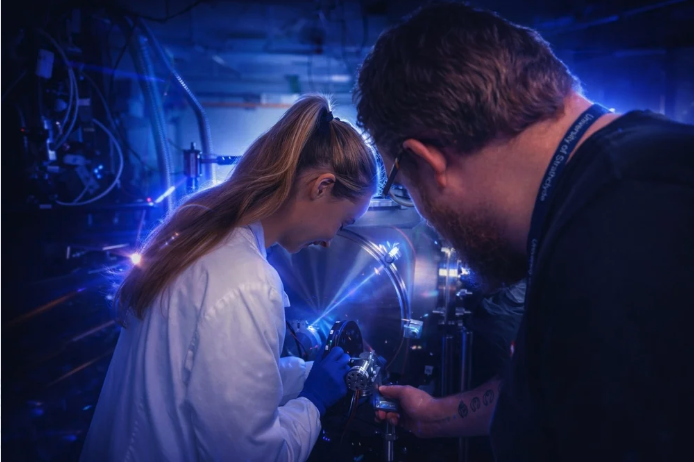
In this panel discussion chaired by presenter, broadcaster and the BBC’s first Global Health Correspondent Tulip Mazumdar, the research teams behind two of this year’s flagship exhibits at the Summer Science Exhibition, come together to discuss their cutting-edge work and how they hope their research will change the lives of cancer patients.
Panelists include: Professor Kenneth Long and Professor Pat Price of Imperial College London, whose research into laser-driven radiotherapy features in the exhibit Laser-focussed on science for radiotherapy. Professor Nguyen T. K. Thanh and Dr Martin Foster of University College London, whose work on the use of nanoparticles can be used as diagnostic and therapeutic tools is showcased in the exhibit Nanomaterials: A giant leap for healthcare.
Other Upcoming Events
Special Rutherford Appleton Laboratory Lecture and Discussion
Date: Thursday, 21 May 2026, 14:00 - 15:00 BST
Location: Pickavance Lecture Theatre, Rutherford Appleton Laboratory and online.
Meeting page: https://indico.stfc.ac.uk/event/1927/
The Rutherford Appleton Laboratory will host “The LhARA Initiative: A Transformational Approach to Precision, Personalised Particle-beam Therapy” presenting the scientific motivation for the LhARA initiative along with the programme of technological innovation which aims to deliver transformative capabilities for the exploration of fundamental science as well as societal and industrial impact.
Speakers include: Prof Yolanda Prezado (Santiago di Compostella), Kenneth Long (Imperial/STFC), Emma Melia (University of Birmingham), Colin Whyte (University of Stathclyde), Dr Tracy Underwood (Leo Cancer Care), and Bob Bingham (STFC). See event page for details:
FLASH Radiotherapy & Particle Therapy - FRPT 2026
Date: 2-5 December, 2026
Location: Lisbon (with online participation available)
FRPT 2026 is expanding! This year, the programme will also include Spatially Fractionated Radiation Therapy (SFRT), marking an important step as the conference evolves into FRPT-SFRT 2026.
As cancer rates continue to rise, approaches like FLASH Radiotherapy and SFRT are becoming increasingly relevant in developing more personalised and cost-effective treatments. Bringing these areas together in one programme creates more space for meaningful discussion across research, clinical practice, and technology.
If your work relates to FLASH, particle therapy, or SFRT, this is where those conversations come together.
Recent Events
LhARA Collaboration Meeting #9
Date: 29-30 April 2026
Location: STFC Rutherford Appleton Laboratory, Harwell
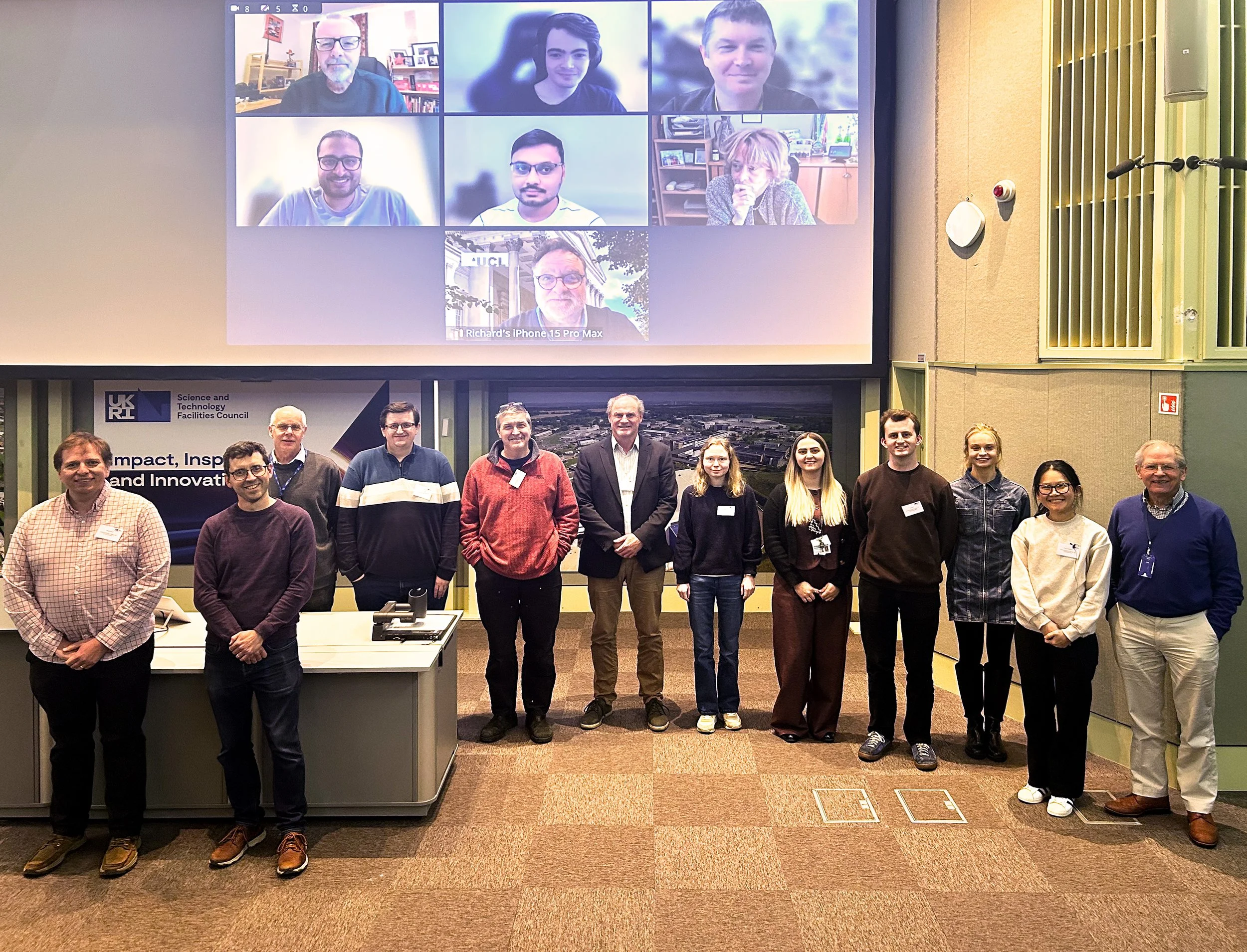
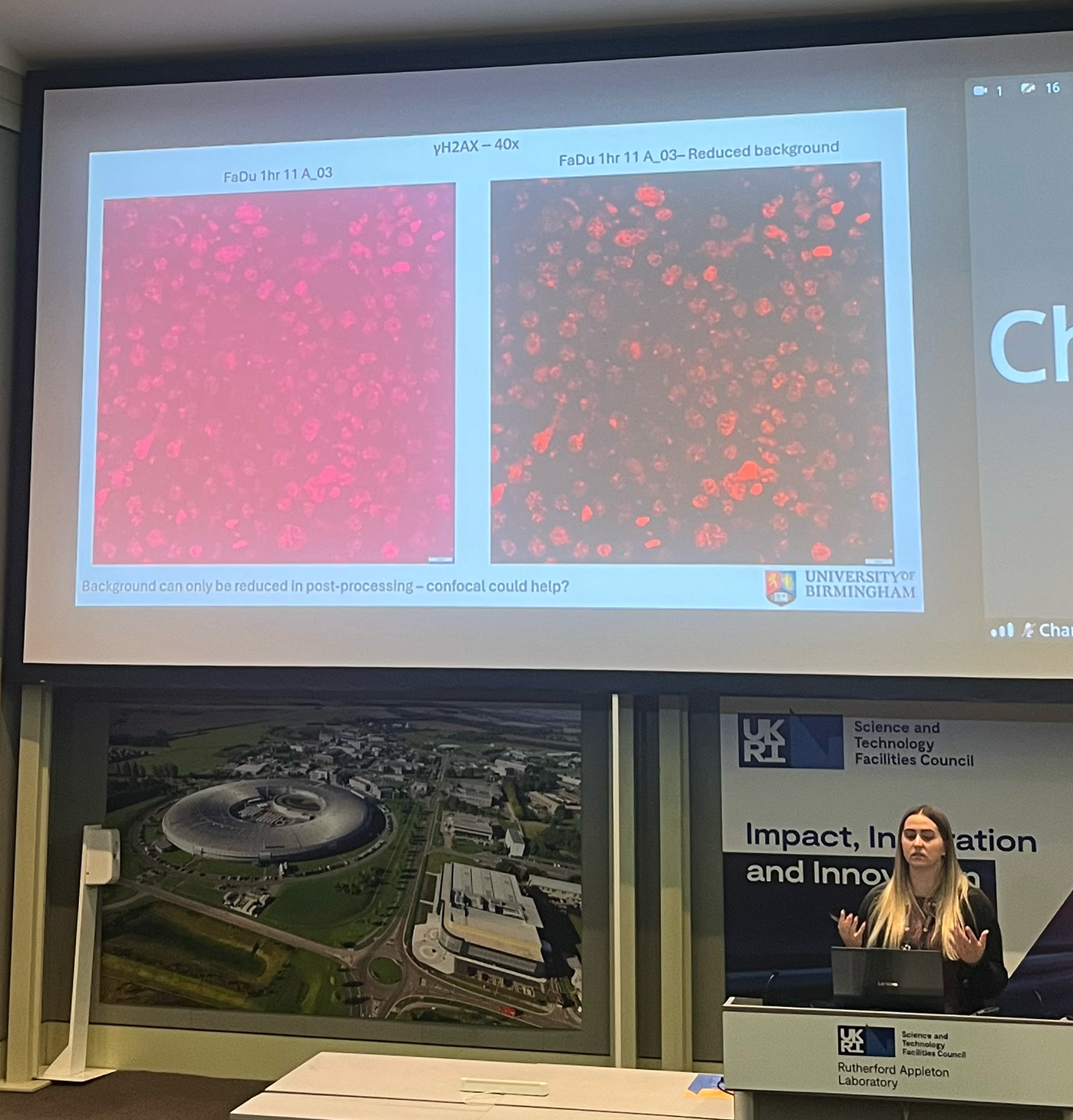
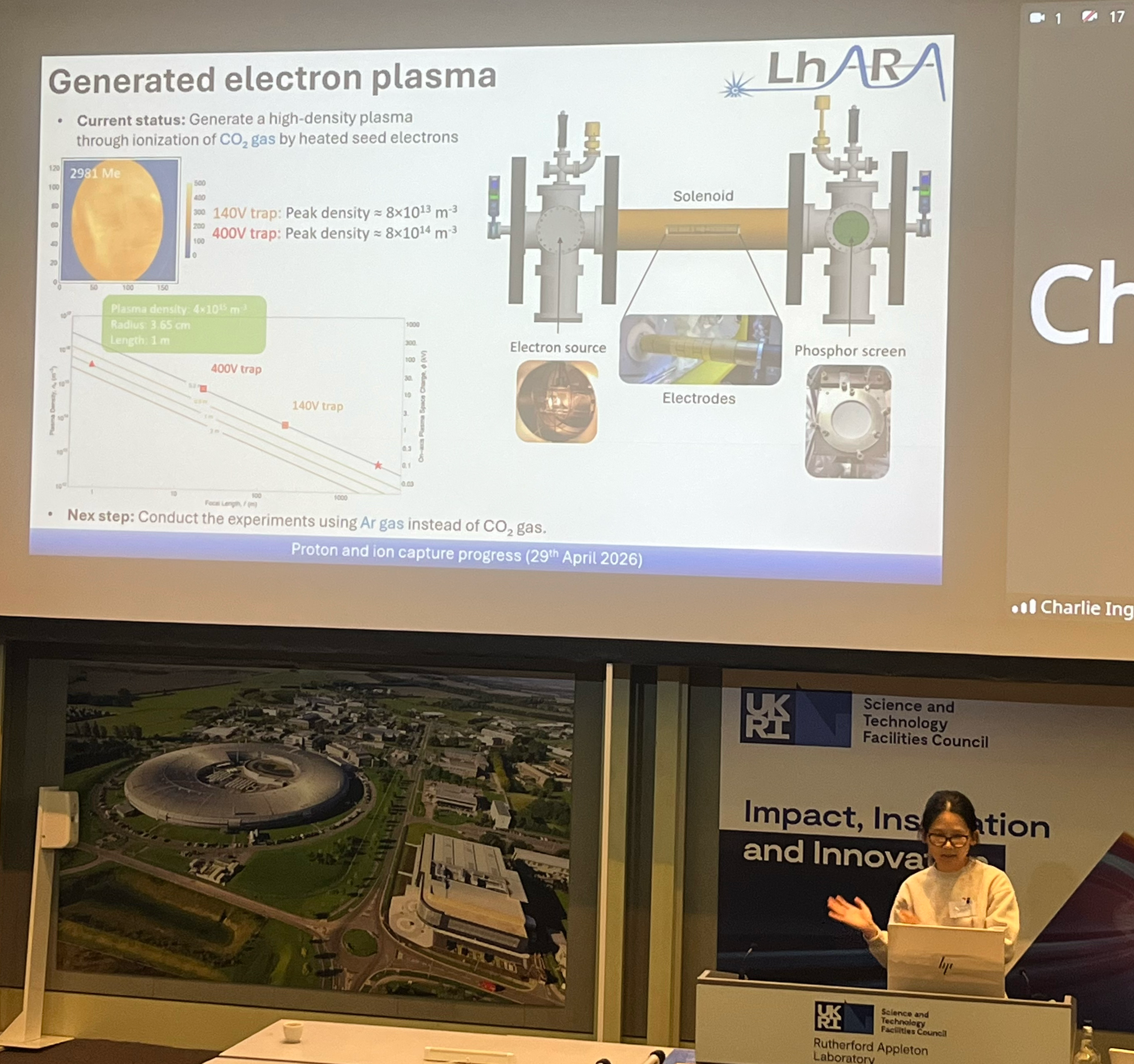
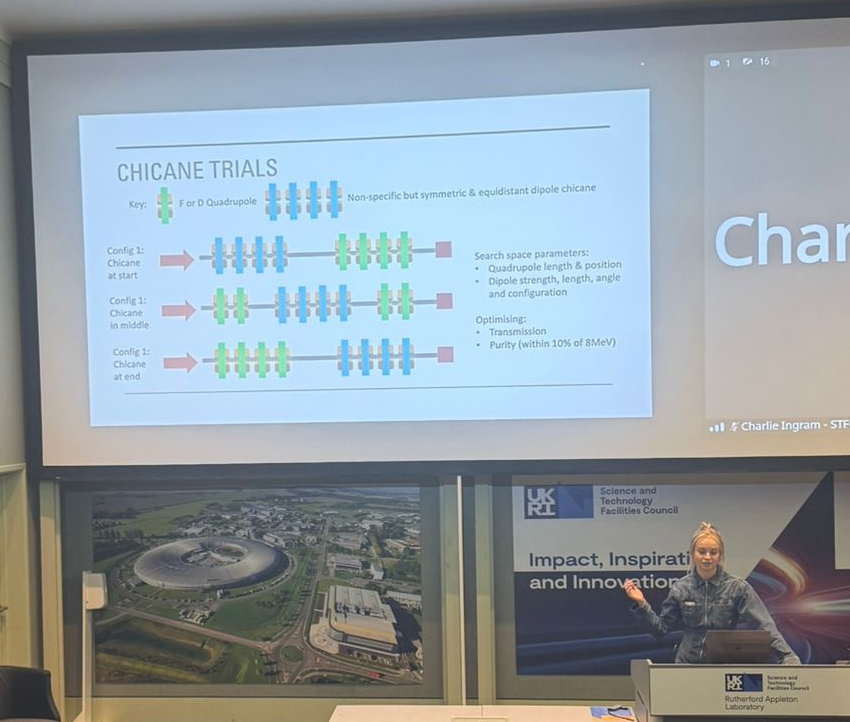
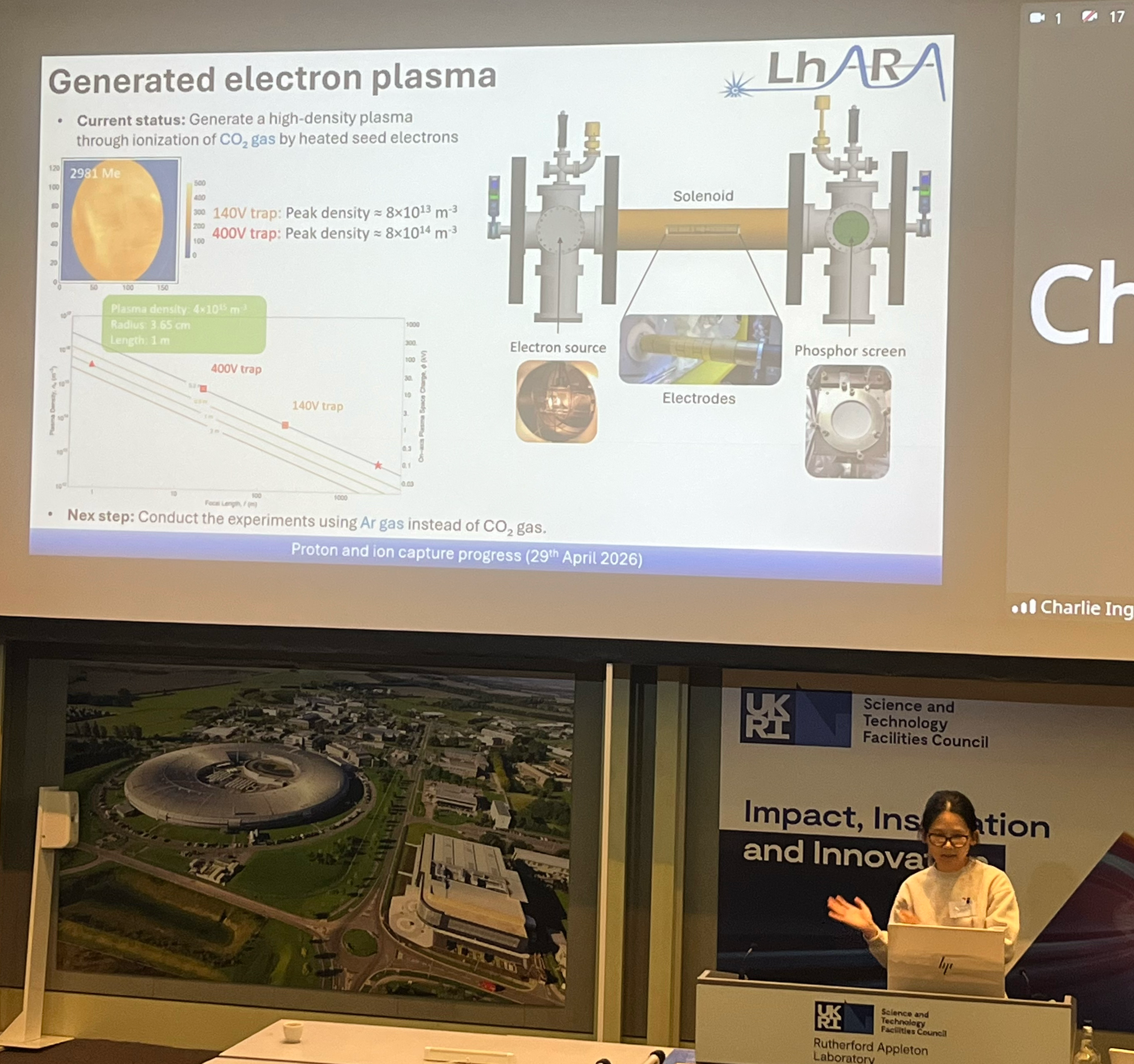
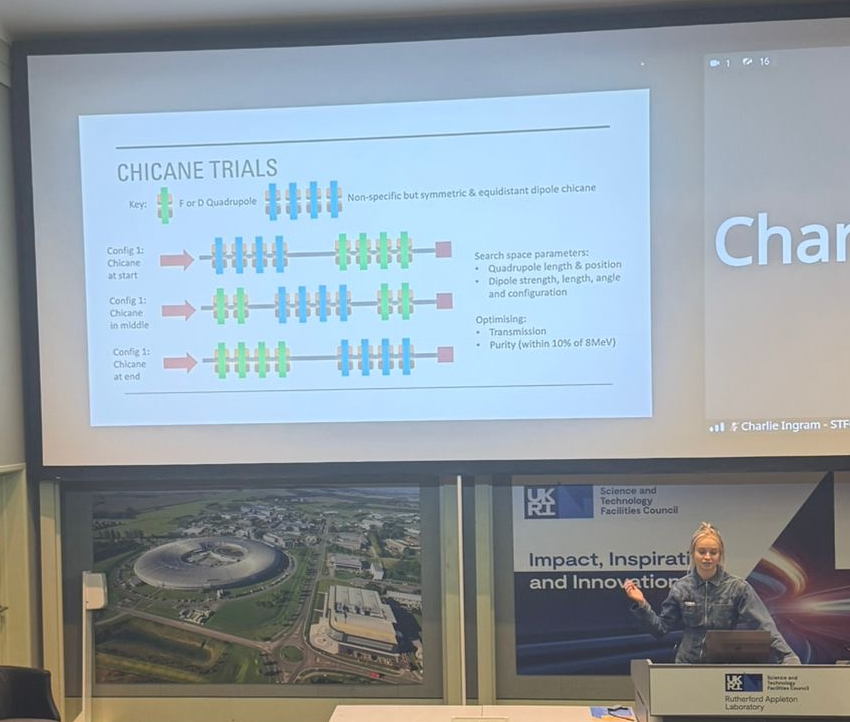
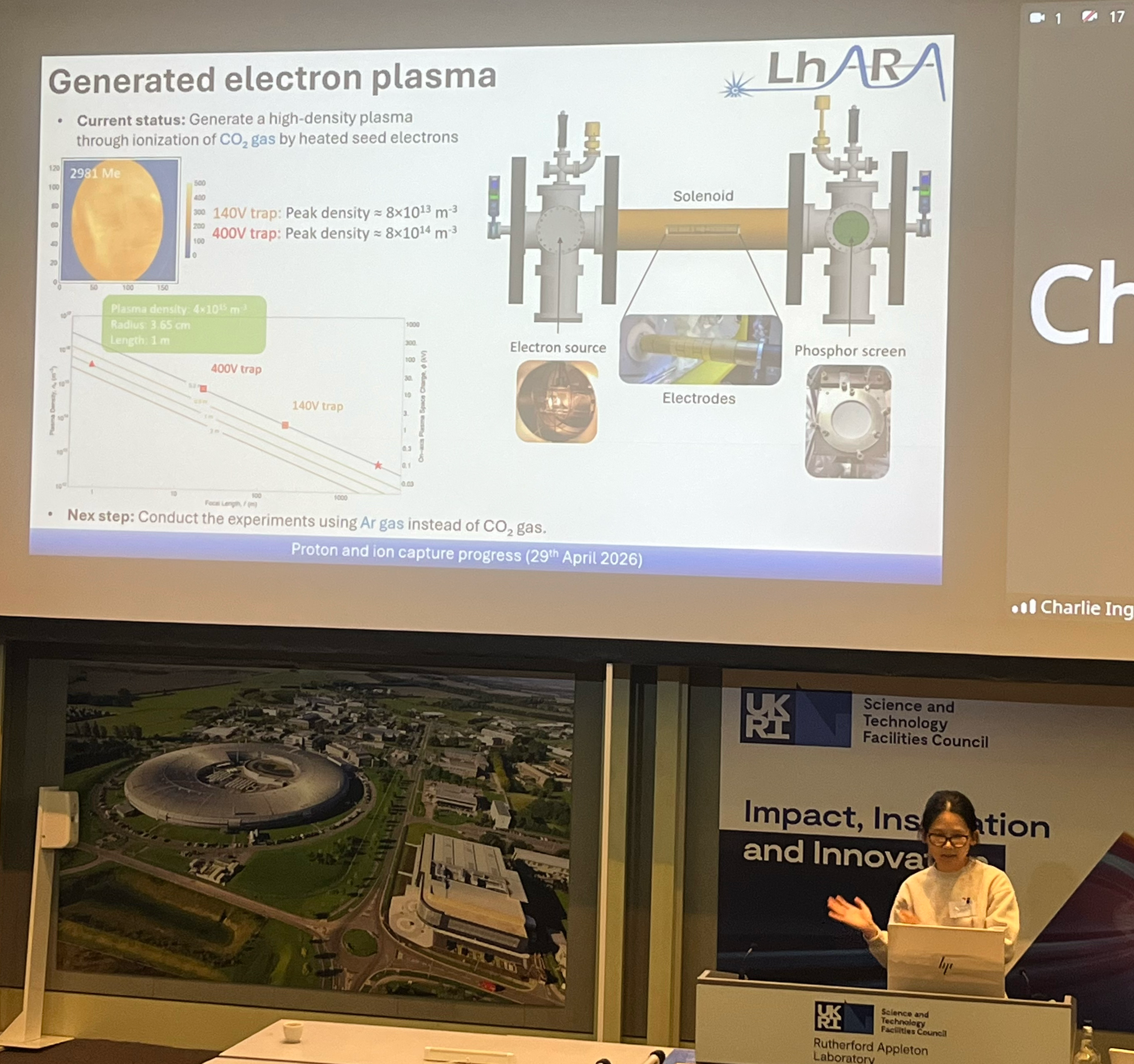
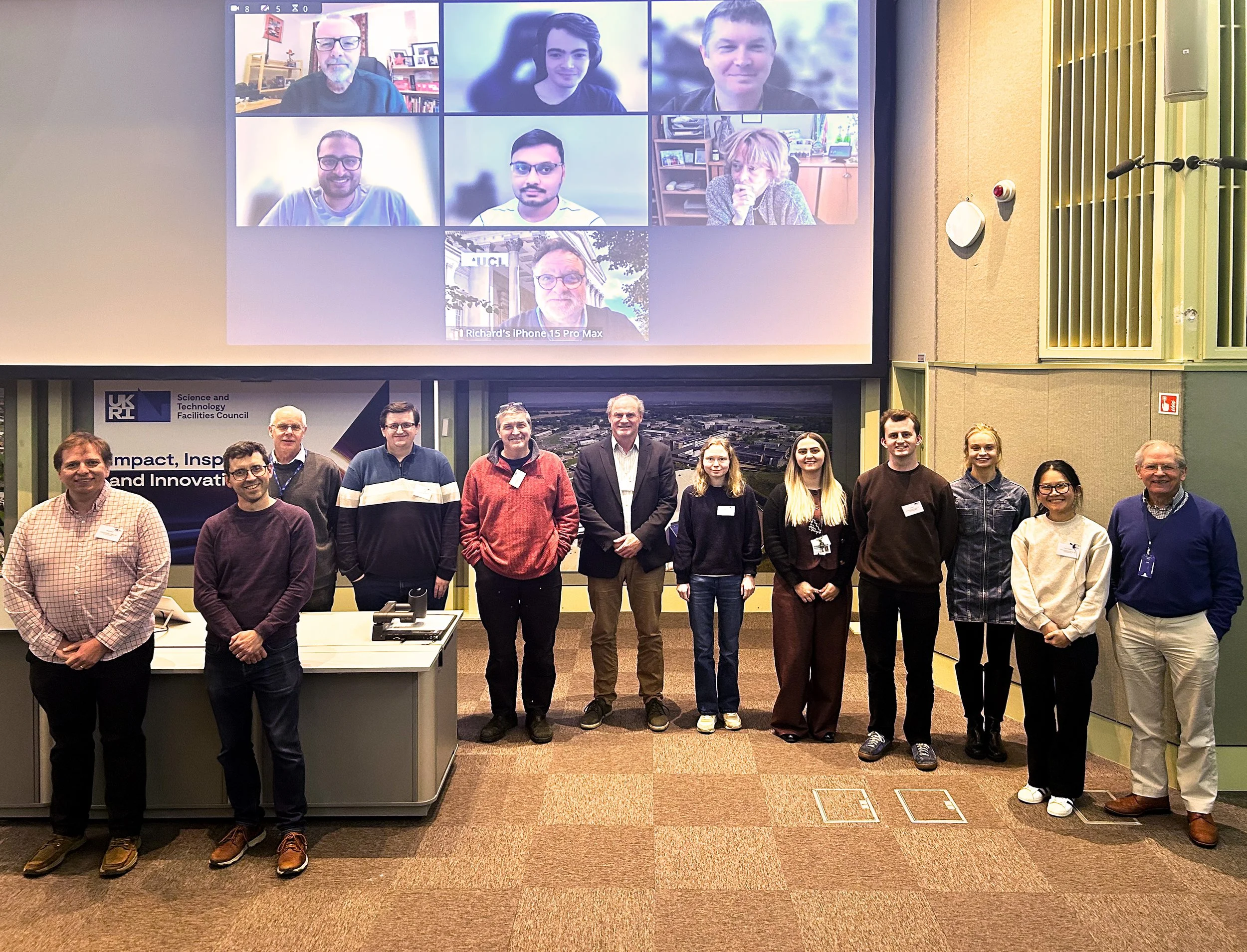
Our recent collaboration meeting brought together researchers from across laser and plasma physics, accelerators, medicine and radiobiology to share updates and shape the next stages of the project.
Presentations across these areas highlighted progress from laser-driven beam generation through to accelerator design and potential clinical applications, reinforcing the importance of integrated expertise in developing new technologies for proton therapy.
This interdisciplinary approach is key to developing new technologies for proton therapy.
LhARA in the News
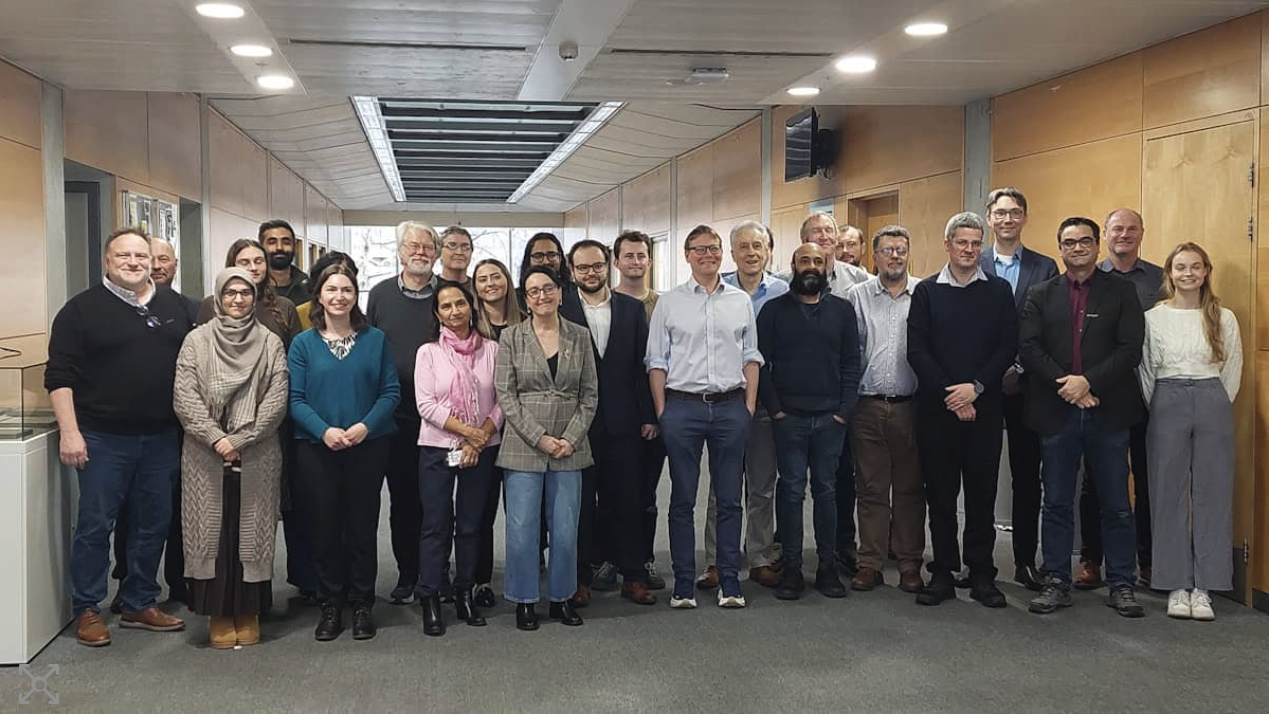
Expert gathering at CP4CT workshop with many others joining the event online. (Courtesy: Tami Freeman)
Physics World: “A Glimpse into the Future of Particle Therapy”
Date: 10 Mar 2026
By: Tami Freeman
Physics World recently featured the LhARA collaboration’s advancements in laser-driven charged particles including highlights from the February CP4CT workshop series at Imperial College London and each of the speakers.
“We want to lay the foundation for the transformation of ion beam therapy,” said Kenneth Long (Imperial College London/STFC), who co-organized the event together with Richard Amos (University College London).
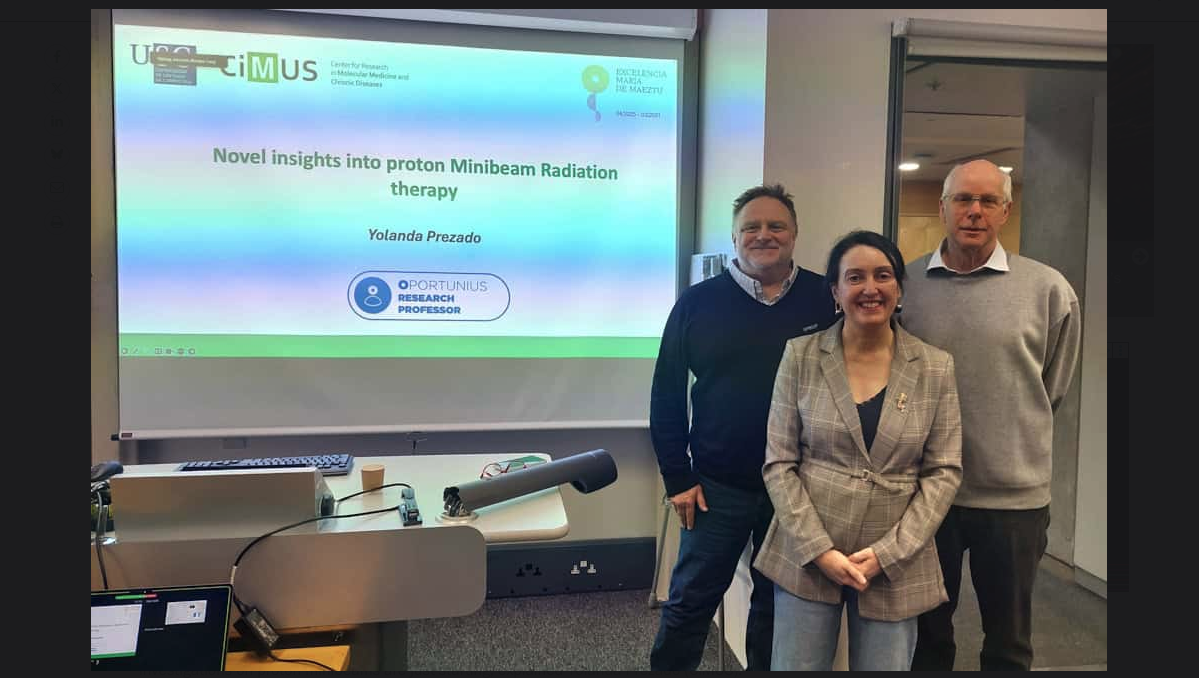
Left to right: Richard Amos, Yolanda Prezado and Kenneth Long. (Courtesy: Tami Freeman)
Imperial News: “New Laser-hybrid Accelerator Design Strengthens Vision for Next-Generation Radiotherapy Research Facility”
Date: 20 Mar 2026
By: Eleanor Barrand
Imperial News headlines the LhARA collaboration’s “major milestone” of publishing its Conceptual Design Report (CDR) and proposal for the UK-based Ion Therapy Research Facility (ITRF). Quoting from the article, Dr Massimo Noro (UKRI‑STFC Daresbury Laboratory), Project Sponsor for ITRF said,
“This Conceptual Design Report represents the culmination of several years’ work enabled by the UKRI Infrastructure Fund, which has for the first time brought together medical and technology researchers to develop a radiobiology facility. ITRF aspires to be the leading facility to develop the techniques needed to improve cancer treatments in the UK and around the world.”
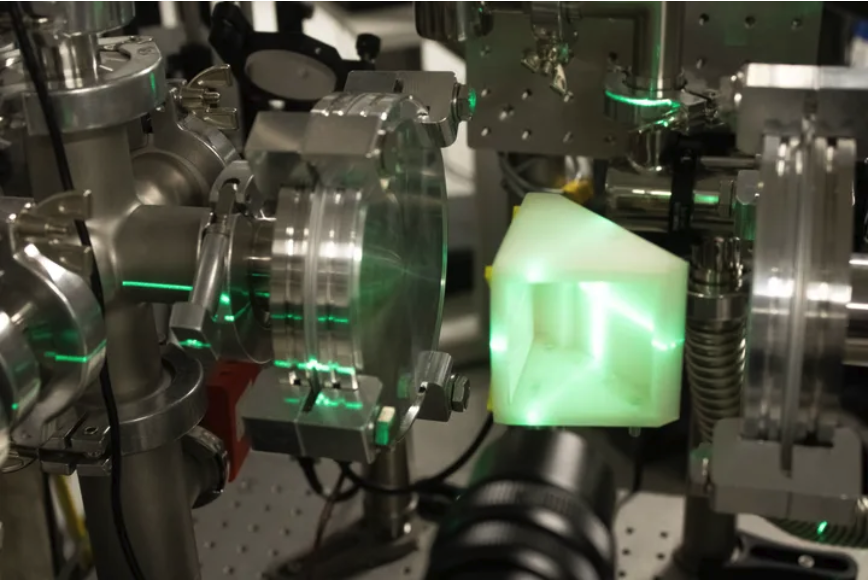
Close up of SCAPA set up. (Courtesy: Robbie Wilson)
Collaborator Spotlight
In this issue we begin our tour of the activities in the institutes that make up the LhARA collaboration.
Science and Technology Facilities Council (STFC)

Among the many valuable partners contributing to the LhARA initiative, UK’s Research and Innovation Science and Technology Facilities Council (STFC) have played a key role in our Particle Beam Therapy (PBT) experiment. STFC’s mission is to deliver world-leading national and international research and innovation capabilities and, through those, discover the secrets of the Universe. Their major research and innovation campuses at Harwell and Daresbury and research facilities across the UK and overseas support fundamental research in astronomy, physics, computational science and space science.
LhARA has contributions across departments at STFC, with contributions made by personnel from ASTeC and Technology Department at Daresbury Laboratory, the Central Laser Facility, Particle Physics Department (Rutherford Appleton Laboratory), and support from ISIS Neutron and Muon Source (RAL).
Personnel from STFC’s ISIS Neutron and Muon Source have supported the collaboration in the development of FFA magnet lattice designs, focused on allowing flexibility beam delivery and energy efficiency. These designs have been simulated to ensure high magnetic field quality. Meanwhile, ASTeC at Daresbury Laboratory is playing a crucial role in designing the accelerator system and the integration of the facility.
Once operational, LhARA will be capable of delivering instantaneous radiation doses higher than any existing facility. Achieving this requires maintaining initial shot-to-shot laser stability. To address this, the Central Laser Facility is active in the modelling the initial beam dynamics to enhance system performance.
We thank STFC and all our partners for the diverse and critical ways they are contributing to the LhARA collaboration’s collective mission.
CP4CT
Charged Particles 4 Cancer Therapy
We invite you to consider donating to CP4CT, a charity driven by a conviction that pioneering cancer research that integrates physics, engineering, and medical expertise will drive meaningful breakthroughs in treatment. This registered charity directly supports the LhARA initiative and you can learn more about the charity, as well as donate to LhARA through CP4CT.
Learn more and donate here today:
Thank you for your continued interest and support in LhARA. We are very excited about 2026 and look forward to sharing more about this important collaboration in the new year.
Warm regards,
The LhARA Team